An Executive Perspective by the CEO
Introduction
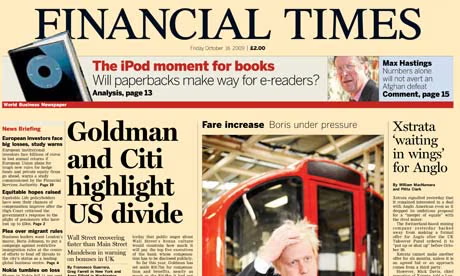
Financial news media plays a powerful role in shaping how individuals perceive markets, investments, and economic risk. Headlines move markets, commentators influence sentiment, and breaking news often triggers immediate reactions from investors around the world. While access to financial information has never been greater, more information does not always translate into better decisions.
As a CEO with long-standing experience in financial strategy, capital allocation, and risk management, I have observed a consistent pattern: individuals who rely heavily on daily financial news often underperform those who follow disciplined, long-term investment strategies. The paradox is clear—constant exposure to financial news can actually cost you money.
This article explores why the financial news media can be harmful to your wealth, how it shapes behavior in counterproductive ways, and how investors can protect themselves by adopting a more executive-level approach to information and decision-making.
The Business Model of Financial News Media
To understand the impact of financial news, one must first understand its business model. Financial media organizations compete for attention in an increasingly crowded information landscape.
Revenue is driven by:
- Advertising impressions
- Click-through rates
- Viewer engagement
- Subscription growth
This model incentivizes urgency, emotion, and constant updates rather than thoughtful, long-term analysis.
Sensationalism Over Substance
Financial headlines are designed to capture attention quickly. Words such as “crash,” “collapse,” “soar,” and “panic” are frequently used to provoke emotional responses.
From a CEO perspective, sensationalism introduces noise into the decision-making process. Emotional reactions driven by headlines often lead investors to buy high, sell low, or abandon sound strategies.
Short-Term Focus in a Long-Term Game
Markets operate over decades, yet financial news operates in minutes and hours. This mismatch creates confusion for individual investors.
Constant short-term commentary distracts from:
- Long-term fundamentals
- Compounding returns
- Strategic asset allocation
Executive investors understand that short-term volatility is irrelevant to long-term objectives.
The Illusion of Actionable Insight
Financial news often creates the illusion that every market movement requires action. In reality, most daily market fluctuations have no bearing on long-term outcomes.
From a leadership standpoint, unnecessary action is often more damaging than disciplined inaction.
Herd Behavior and Market Psychology
Media coverage amplifies herd behavior. When news outlets repeatedly highlight the same narratives, investors feel pressure to conform.
This dynamic contributes to:
- Asset bubbles
- Panic selling
- Overcrowded trades
CEOs recognize herd behavior as a risk—not a signal.
Overconfidence Fueled by Constant Information
Continuous exposure to market commentary can create a false sense of expertise. Investors may believe they are informed, when they are simply reacting.
From an executive perspective, confidence must be grounded in strategy and data—not volume of information.
Financial News and Emotional Decision-Making
Fear and greed are powerful drivers of financial behavior. Financial media frequently amplifies both.
Breaking news during market downturns intensifies fear, while bullish commentary during rallies fuels greed. Both emotions undermine rational decision-making.
Market Timing: A Costly Illusion
Financial news encourages the belief that markets can be timed successfully through constant monitoring.
Decades of evidence suggest that consistent market timing is extraordinarily difficult. Missed recovery days can significantly reduce long-term returns.
As a CEO, I view market timing as speculation—not strategy.
The Opportunity Cost of Distraction
Time spent consuming financial news is time not spent on activities that actually build wealth:
- Career development
- Business growth
- Skill acquisition
- Strategic planning
From an executive standpoint, opportunity cost is often invisible but substantial.
Conflicts of Interest in Financial Commentary
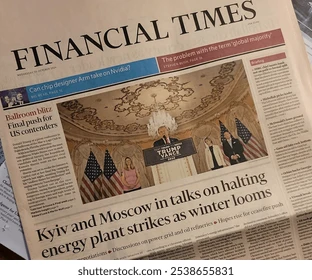
Not all financial commentary is objective. Analysts, sponsors, and institutions may benefit from promoting certain narratives.
Understanding potential conflicts of interest is essential for informed decision-making.
Data Without Context
Financial news delivers data points without sufficient context. Isolated statistics can be misleading without broader economic and historical perspective.
CEOs prioritize context, trend analysis, and structural understanding over isolated data.
Volatility as a Feature, Not a Flaw
Market volatility is normal. Financial media often frames volatility as a problem requiring intervention.
From a leadership perspective, volatility creates opportunity for disciplined investors and should not trigger emotional reactions.
How Financial News Impacts Individual Investors
For individual investors, excessive media consumption often results in:
- Higher trading frequency
- Increased transaction costs
- Tax inefficiency
- Lower net returns
These costs compound quietly over time.
The CEO Mindset Toward Financial Information
CEOs consume financial information selectively and strategically.
Key principles include:
- Focus on fundamentals
- Limit noise
- Prioritize long-term objectives
- Separate information from emotion
This mindset protects capital and supports consistent performance.
Building a Personal Information Filter
Investors should develop filters that determine what information deserves attention.
Effective filters emphasize:
- Structural economic trends
- Company fundamentals
- Long-term policy changes
Daily market commentary rarely qualifies.
Replacing News Consumption With Strategy Reviews
Rather than tracking daily headlines, investors benefit from periodic strategy reviews.
Quarterly or annual reviews encourage reflection, discipline, and alignment with goals.
Media Consumption and Stress
Constant exposure to financial news increases stress and anxiety, particularly during market downturns.
Reducing media exposure often improves both mental well-being and financial outcomes.
Long-Term Evidence Against Reactive Investing
Historical data consistently shows that investors who trade frequently underperform those who remain invested.
Financial news encourages reaction; successful investing rewards patience.
The CEO Framework for Protecting Wealth From Media Noise
From executive experience, wealth protection follows this framework:
- Define long-term objectives
- Build a diversified strategy
- Limit exposure to daily financial news
- Review performance periodically
- Maintain emotional discipline
Educating Yourself Versus Being Entertained
There is a difference between financial education and financial entertainment. Much of modern financial news prioritizes engagement over education.
CEOs invest in deep learning, not constant updates.
When Financial News Can Be Useful
Financial news is not inherently harmful. It can be useful when:
- Major structural changes occur
- Policy decisions affect long-term outlooks
- Corporate fundamentals materially change
The key is selective consumption.
Financial Independence Requires Information Discipline
True financial independence requires control over not only money, but information.
Reducing dependence on financial news empowers investors to think independently.
Conclusion: Think Like a CEO, Not a Commentator
Financial news media is designed to capture attention—not protect your wealth. For many investors, constant exposure leads to emotional decisions, unnecessary action, and reduced returns.
As a CEO, my message is clear: wealth is built through discipline, patience, and strategy—not headlines. By limiting financial news consumption and focusing on fundamentals, investors can avoid costly mistakes and improve long-term outcomes.
In a world saturated with financial noise, clarity becomes a competitive advantage. Choose strategy over sensation, and your money will benefit.
Word Count:
714
Summary:
Listining to the Financial News Media is Like Listening to the Pied Piper!
Keywords:
Stocks, investing, stock market, mutual funds, financial planning, e-trade, ameritrade, scottrade, make money, 401k, stock trading, Merrill lynch, nyse, amex, roth ira, retirement planning, online, st
Article Body:
The communication innovations we have around us today like the internet, financial newspapers, and special interest television channels focused on investing like CNBC are a high speed pipeline of nonsensical chatter. All these sources of information mean that there is no shortage of media people trying to answer our questions about the stock market and specific stocks. You have to remember that the news media are constantly competing to survive against other stuff you can watch. If they don�t always sound like they know exactly what is going on then you won�t watch their presentations. If you don�t tune into their show then their ratings go down. If their ratings go down they get fired and their show gets cancelled.
This means that financial journalists are in the business of finding great stories and sounding like authorities no matter what. The stock market is a great place for them to dig up news �scoops� to feed to the public. They don�t really check their facts very well and sometimes not at all. This means that if some insider wants to feed you a line of bull manure then all they have to do is maintain good connections with financial journalists, sponsor an investment show, or outright buy an investing TV channel like Jack Welch the CEO of GE did when he set up CNBC. What a great way for inside executives to control the flow of news information to the public then to actually own one of the only financial news channels�but not so great for you!
These journalists also kick up the fire by bringing in so-called �experts� to talk about each side of some topic that real experts would not consider important.
This just makes it all the more confusing for the public to understand what is important when buying or selling a stock. Shows on CNBC like �Closing Bell�, �Kudlow & Company�, and �Mad Money� do nothing but confuse and misdirect the attention of most individual investors in the public. Even worse this means that the financial news media allows overpriced stocks to be recommended through analysts in the inside web that inside executives are dumping on the public because they are trying to get out. This actually happened at the top of the bull market in 1999. For a great historical description of what happened read Maggie Mahar�s book entitled �Bull.�
The famous Yale University Economist, Prof. Bob Shiller, Ph.D. is particularly harsh on the media in his book �Irrational Exuberance.� Dr. Shiller is one the economists that Alan Greenspan respects most and where he got the term �Irrational Exuberance.� He portrays the media as sound-bite-driven where superficial opinions are preferred over in-depth analyses. I agree whole heartedly with him and contend that it is also done just because the industry would rather have the retail investor confused and emotionally pliable to get you to buy and sell when they want with total disregard for your best interests!
People who had invested their life savings in the stock market were ripped off in the stock market because the financial news media and analysts were hyping up what a great buy stocks were at the very top of the market in 1999 and 2000. At the same time inside corporate executives were selling out everything they had. What is amazing is that our federal government in the form of the Security Exchange Commission never did a thing about it. There was never a blanket case taken or an outcry that almost all of the inside executives had somehow magically sold out of the market six months before the market crashed.
Here is the valuable tip I want you to consider: when you are a beginner investor it is important that you DO NOT WATCH THE FINANCIAL NEWS OR READ THE FINANCIAL NEWSPAPERS! Don�t let the stock market industry lead you around by the nose like livestock to the slaughter house. Don�t listen to what they want you to listen to. You should focus on learning what is important in the stock market and the mass media will only confuse you until you have educated yourself.
Recommended reading:
- Mahar, M. Bull! A History of the Boom, 1929-1999 (New York, HarperBusiness , 2003)
- Shiller, R., Irrational Exhuberance, (New York, Broadway Books, 2000)


Tinggalkan Balasan